A Linux system you can understand and rebuild.
Abora OS v4.0 Everest is the multi-edition release: five ready-made ISOs, a second-generation ANIX with pluggable configuration languages, and real GPU driver support, all on NixOS, with 23 desktop environments and TinyPM v4.

Why Abora exists
NixOS is strong. Abora makes the first steps less empty.
Abora keeps rollback, reproducible systems, generations, and configuration as code. Then it adds a guided install, usable desktop choices, ANIX commands, repair scripts, and docs that explain the moving parts instead of hiding them.
ANIX
The command layer people actually touch.
ANIX is Abora’s system-management layer. It gives users short commands for checking state, updating, switching, repairing, and rolling back while still respecting the NixOS base.
$ anix status$ anix switch nix gaming$ anix rollback nix$ anix doctor --fixSystem pieces
A distro hub, not a splash page.
The site needs to explain the real pieces: release work, docs, desktops, ANIX, Enterprise, and how users recover when something breaks.
Five ready-made editions
Cosmic, Hyprland, GNOME, KDE, and Other ISOs, all built via make iso-all. Every edition installs the full 23-profile desktop matrix; the edition just sets the live-session default.
ANIX v2
Pluggable configuration languages: ANIX Native, MKO, and ModuCPP all resolve to the same Plan JSON and apply as one transaction. Diff, validate, and apply from any of them.
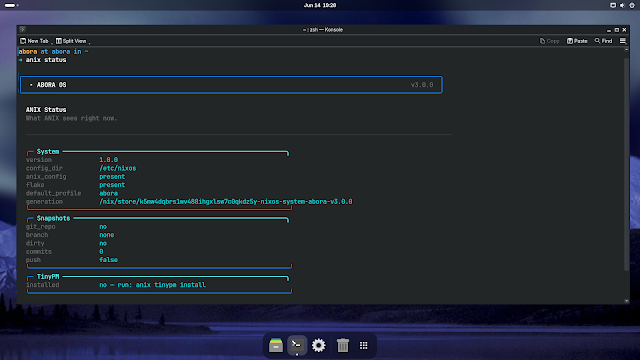
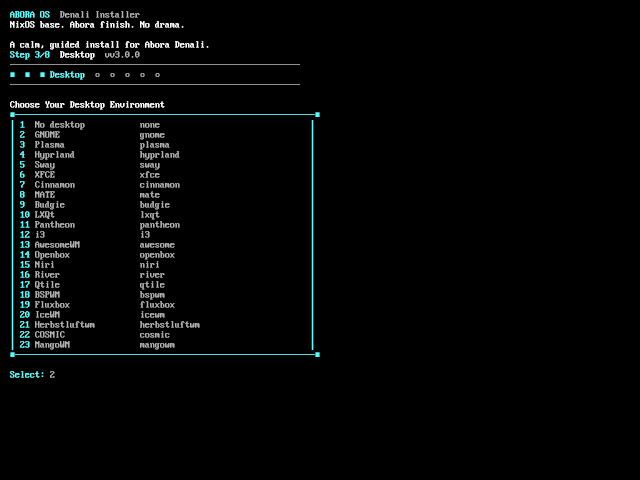
23 desktop environments
GNOME, KDE Plasma, Hyprland, COSMIC, Openbox, Qtile, and 17 more, all CI-tested against nixpkgs before every release.
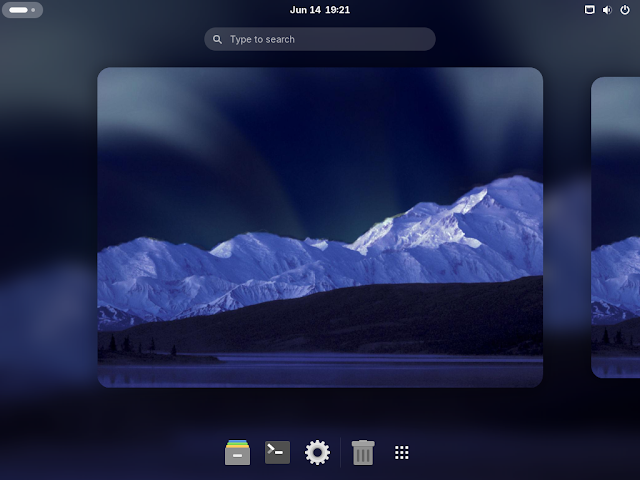
Real GPU driver support
The new abora.gpu option covers nouveau, nvidia, nvidia-open, amdgpu, intel, or none. The installer detects your GPU via lspci and defaults NVIDIA hardware to license-free nouveau.
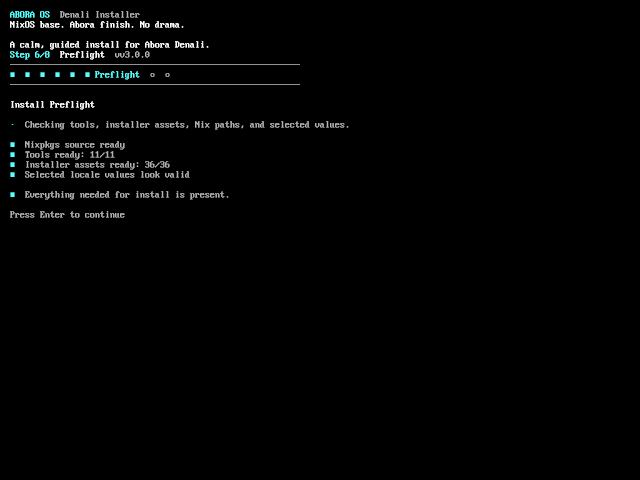
TinyPM v4
The app layer understands Abora, ANIX, and NixOS. grab, sources, system, and repair all know the full stack.
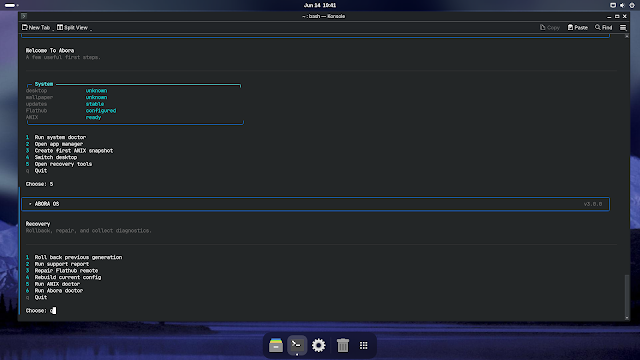
Full OS branding
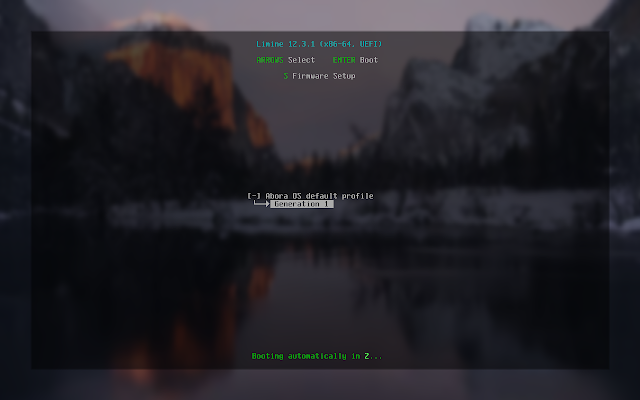
Limine bootloader, Plymouth splash, Abora wallpaper pack, Papirus Dark icons, Spaceship prompt, and Fastfetch on first shell open.
Desktop choice
Use the desktop you came for.
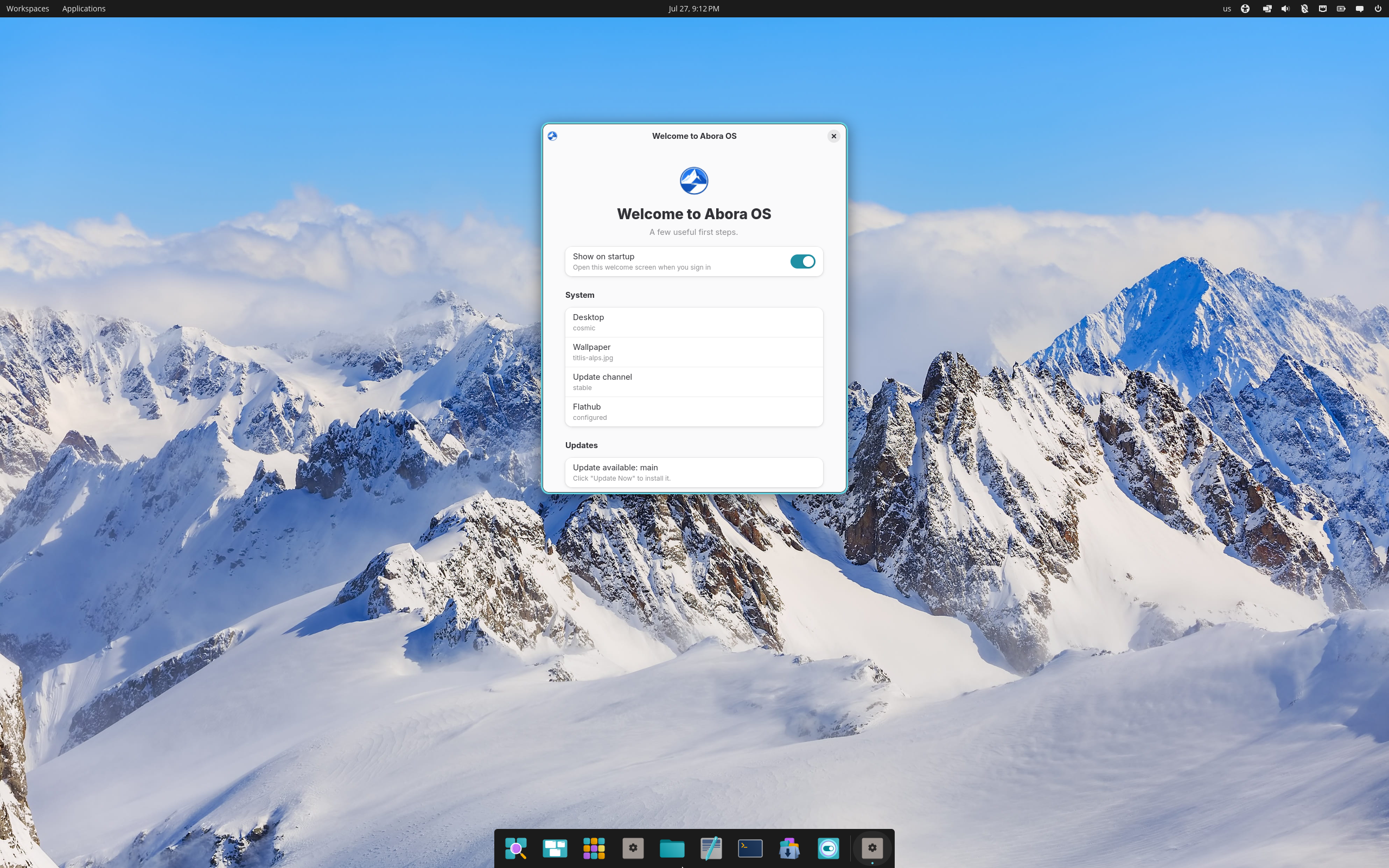
These are real Abora desktop captures, not generated placeholders.
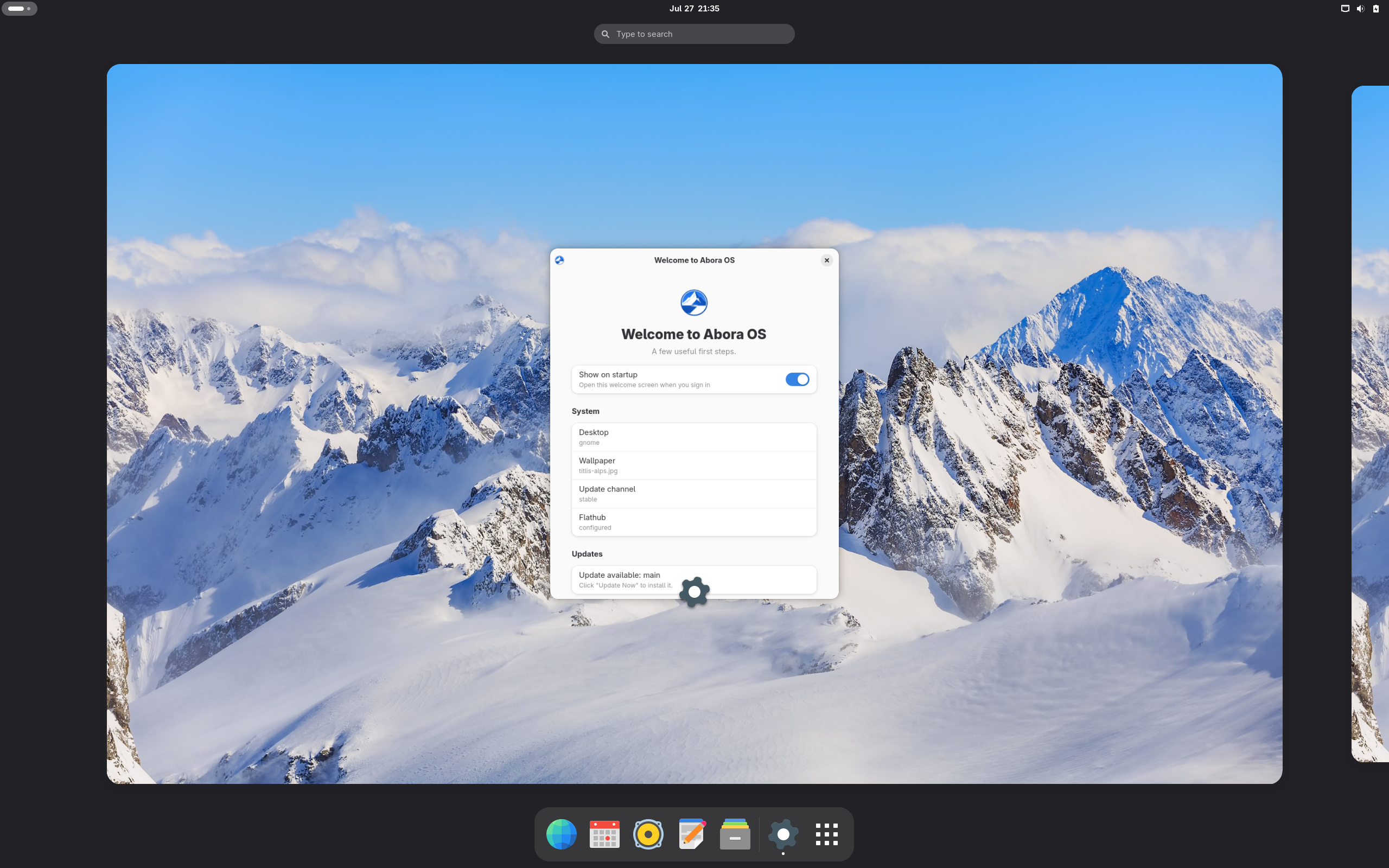
GNOME
The polished desktop path for people who want a complete graphical session.
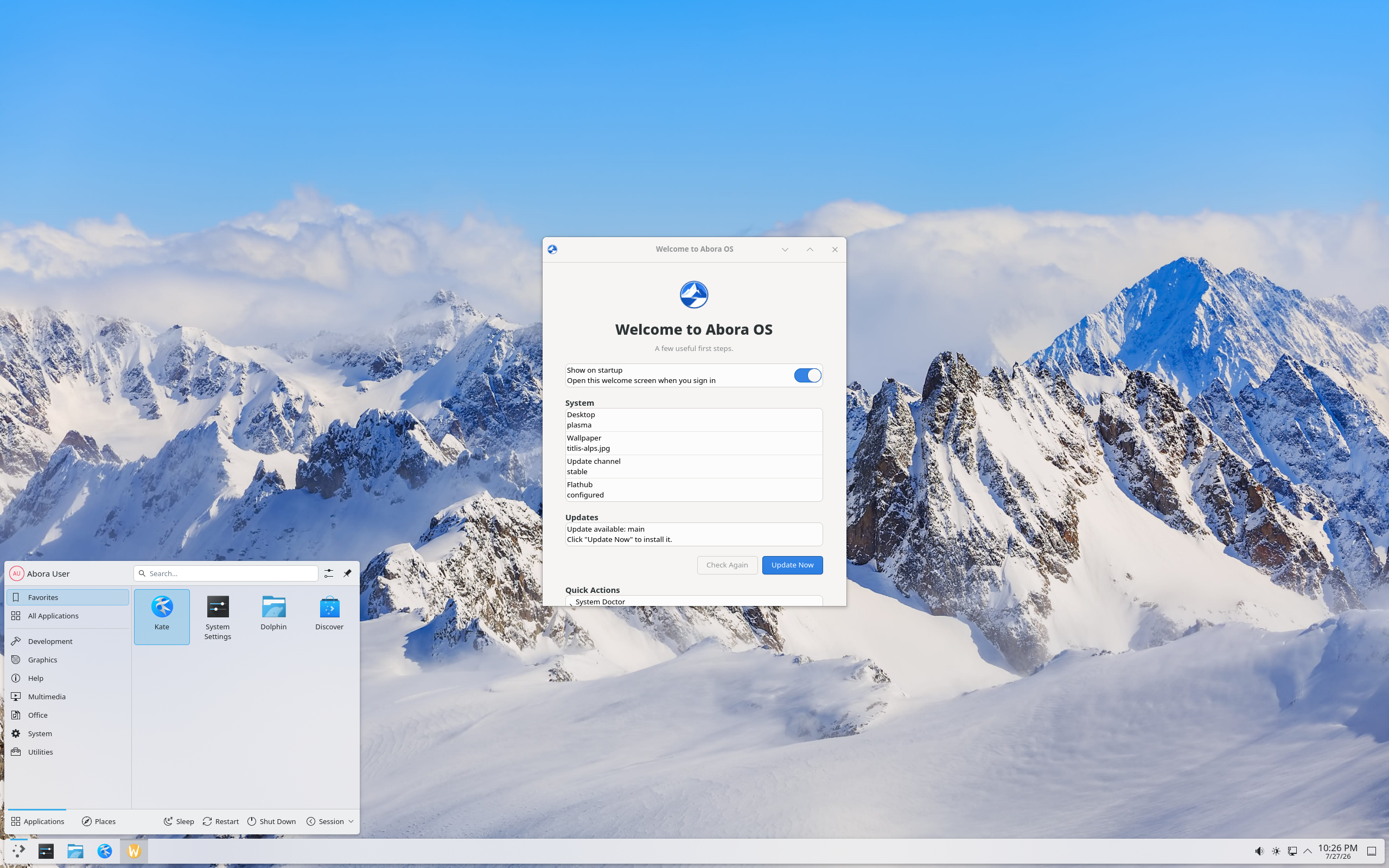
KDE Plasma
Flexible, familiar, and good for users who want deep desktop control.
Hyprland
A modern Wayland tiling workflow for keyboard-heavy users.
COSMIC
A newer desktop option for users who want a different modern Linux session.
More options
Openbox, Qtile, Xfce, Sway, River, Niri, LXDE, and community profiles.
Abora v4.0 Everest
Five editions. One system underneath.
Everest is the multi-edition release: five ready-made ISOs, ANIX v2 with pluggable configuration languages, real GPU driver support, and 23 desktop choices, built on Denali's foundation.
Documentation
Read the manual, then open the scripts.
The docs page now points at the actual Abora repo docs and lists every script entry point so builders can trace how the system is made.
Install and recover
Installation, update, rollback, repair, and release notes are grouped together.
Script map
Every script in the Abora repo is listed with what it is for.
Build your own
The docs point to build, preflight, release, and ISO scripts for people who want to remix it.
Project links
The public center of Abora.
Downloads, docs, ANIX, GitHub, releases, community, and older releases all lead back here.
Help shape Abora
What would you run?
Your feedback directly influences what we build next. Vote on which Abora flavors interest you most.
Community poll
Would you actually run Abora LTS if it shipped today?
It's technically close to release-ready, there are just some bugs left to work through. Whether it's worth pushing that last stretch depends partly on whether anyone would use it. No account, nothing stored except your own choice on this device.
Community poll
If not LTS, would you use Abora Gaming on Steam Deck?
Imagine Abora optimized specifically for gaming: curated gaming desktops, performance tweaks, built-in Steam Deck support, and gaming-first configurations. Would that be something you'd run? Especially interested in handheld gaming device users.